
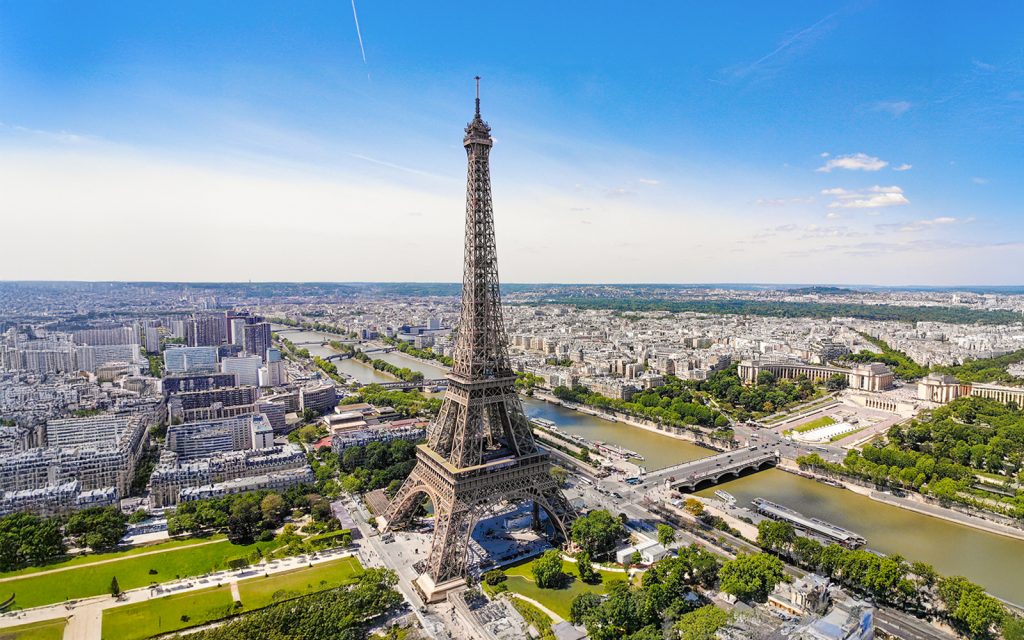
🗼 History of the Eiffel Tower
The Eiffel Tower is one of the most recognized landmarks in the world and a powerful symbol of France. Located in Paris, this iron masterpiece attracts millions of visitors every year. From controversy and criticism to global admiration, the history of the Eiffel Tower is a fascinating journey of innovation, art, and national pride.
📜 The Birth of an Icon (1887–1889)
The story of the Eiffel Tower begins in the late 19th century. The French government organized the 1889 Exposition Universelle (World’s Fair) to celebrate the 100th anniversary of the French Revolution. They wanted a monumental structure that would represent modern engineering and French industrial power.
Engineer Gustave Eiffel and his company won the design competition. Although many people believe Eiffel personally designed the tower, the main designers were Maurice Koechlin and Émile Nouguier, engineers working for Eiffel’s company. Architect Stephen Sauvestre later improved the design.
Construction began in January 1887 and was completed in March 1889. The tower was built using more than 18,000 wrought iron pieces and over 2.5 million rivets. Despite its complex structure, it was completed in just over two years — an incredible achievement for that time.
When it was finished, the Eiffel Tower stood at 300 meters tall, making it the tallest man-made structure in the world until 1930, when the Chrysler Building in New York surpassed it.
⚖️ Early Criticism and Public Protest
Today, the Eiffel Tower is loved worldwide. However, when it was first proposed, many artists and intellectuals in Paris strongly opposed it. They believed the iron structure would ruin the beauty of the city. A famous protest letter was signed by writers and artists who called the design “useless and monstrous.”
Despite criticism, Gustave Eiffel defended the project. He argued that the tower represented scientific progress and modern engineering. Over time, public opinion changed, and the tower became a beloved symbol of Paris.
⏳ A Temporary Structure Meant to Be Removed
Interestingly, the Eiffel Tower was not meant to be permanent. It was initially planned to stand for only 20 years after the 1889 exhibition. According to the agreement, it was supposed to be dismantled in 1909.
However, the tower proved useful for scientific experiments and communication. It became an important location for radio transmission and later for television broadcasting. Because of its practical value, the French government decided to keep it permanently.
📡 Role in Communication and War
The Eiffel Tower played an important role in military communication during World War I. Its radio transmitters helped intercept enemy communications and contributed to French military success.
In World War II, when Germany occupied France, the tower again became a symbolic and strategic site. According to popular stories, French resistance fighters cut the elevator cables so that German soldiers would have to climb the stairs to reach the top.
Today, antennas on top of the Eiffel Tower increase its height to approximately 330 meters, making it still one of the tallest structures in Paris.
🎨 Renovations and Modern Developments
Over the decades, the Eiffel Tower has undergone multiple renovations to maintain its strength and beauty. It is repainted approximately every seven years to protect it from rust. The color, known as “Eiffel Tower Brown,” changes slightly depending on the lighting and perspective.
The tower now includes modern facilities such as restaurants, souvenir shops, and glass floors on the first level. It also features stunning light shows at night, making it even more magical for visitors.
The Eiffel Tower is managed by the organization Société d’Exploitation de la Tour Eiffel (SETE), ensuring its preservation for future generations.
🌍 A Global Cultural Symbol
The Eiffel Tower is more than just a structure; it is a global cultural icon. It appears in countless movies, postcards, advertisements, and artworks. It symbolizes romance, art, engineering, and French identity.
Millions of tourists visit every year, making it one of the most visited paid monuments in the world. Visitors can climb the stairs or take elevators to the top for breathtaking views of Paris, including landmarks like the Seine River and the Louvre Museum.
📊 Key Historical Facts
- Construction started: 1887
- Opened to the public: 1889
- Original height: 300 meters
- Current height with antennas: ~330 meters
- Built for: 1889 World’s Fair
- Designed by: Gustave Eiffel’s engineering company
🏆 Why the Eiffel Tower Remains Important Today
The history of the Eiffel Tower shows how innovation can overcome criticism. What was once called an “iron monster” became one of the world’s greatest architectural achievements. It represents technological advancement, creativity, and national pride.
For historians, engineers, and travelers alike, the Eiffel Tower stands as a reminder that bold ideas can shape the future. From its beginnings as a temporary exhibition structure to becoming one of the most visited landmarks on Earth, its story continues to inspire millions.