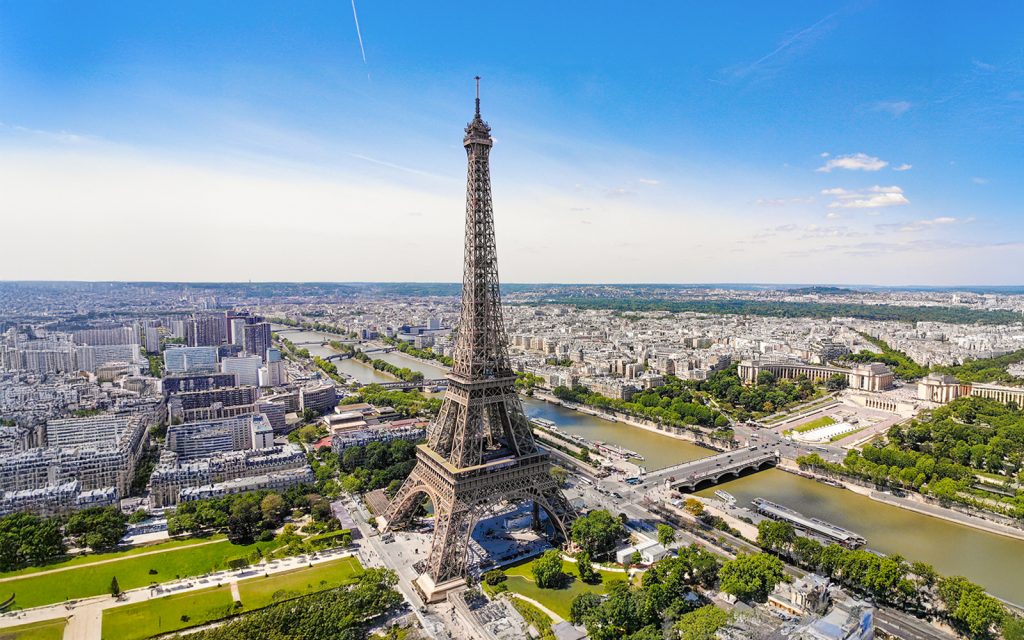
The Eiffel Tower

Interesting Facts About the Eiffel Tower

Interesting Facts About the Eiffel Tower

The Eiffel Tower is one of the most recognizable monuments in the world and a global symbol of France. Located in Paris, this iconic iron structure attracts millions of visitors every year. While many people know it as a romantic landmark, the Eiffel Tower has a fascinating history filled with surprising facts, engineering brilliance, and cultural significance. Below are some of the most interesting facts about the Eiffel Tower that make it one of the greatest architectural achievements in history. 1. The Eiffel Tower Was Meant to Be Temporary One of the most surprising facts about the Eiffel Tower is that it was originally intended to stand for only 20 years. Built as the main entrance arch for the 1889 Exposition Universelle (World’s Fair), the tower was supposed to be dismantled in 1909. However, its scientific value—especially for radio communications—saved it from demolition. 2. Designed by Gustave Eiffel The tower was designed by the engineering company of Gustave Eiffel, whose name the structure proudly carries today. Although two senior engineers in his company created the initial design, Eiffel supported and promoted the project, ensuring its completion. His vision helped transform a controversial design into a global masterpiece. 3. It Was the Tallest Structure in the World When completed in 1889, the Eiffel Tower stood at 300 meters (984 feet), making it the tallest man-made structure in the world at the time. It held this record for 41 years until the Chrysler Building was completed in New York in 1930. Today, with antennas included, the tower stands approximately 330 meters tall. 4. Many Artists Initially Hated It Before its construction, many famous artists and intellectuals in Paris signed a petition criticizing the tower’s design. They described it as an “iron monster” that would ruin the city’s beauty. Over time, however, public opinion changed dramatically, and it became one of the most beloved landmarks in the world. 5. Over 18,000 Iron Parts The Eiffel Tower is made from more than 18,000 individual iron pieces and is held together by about 2.5 million rivets. Despite its massive size, the open lattice structure allows wind to pass through, reducing pressure and ensuring stability. 6. It Changes Height with Temperature Due to thermal expansion, the Eiffel Tower can grow taller in the summer. When temperatures rise, the metal expands, and the tower can increase in height by up to 15 centimeters. In colder weather, it slightly shrinks back. 7. It Requires Regular Painting To prevent rust and maintain its appearance, the Eiffel Tower is repainted approximately every seven years. Around 60 tons of paint are used each time. The tower is painted in a special shade known as “Eiffel Tower Brown,” applied in three different tones to enhance its visual effect. 8. The Tower Sparkles at Night Since the year 2000, the Eiffel Tower has featured sparkling lights that flash for five minutes every hour after sunset. The sparkling effect uses thousands of light bulbs, making it even more magical and attractive to visitors. 9. Secret Apartment at the Top At the top of the Eiffel Tower, Gustave Eiffel built a small private apartment for himself. Unlike the industrial iron structure outside, the interior was decorated comfortably. He used the space to host guests and conduct scientific experiments. 10. A Scientific Laboratory Beyond being a monument, the Eiffel Tower played a significant role in scientific research. It has been used for meteorology, aerodynamics, and radio transmission experiments. During World War I, radio transmissions from the tower helped intercept enemy communications, contributing to France’s defense. 11. It Attracts Millions of Visitors The Eiffel Tower is one of the most visited paid monuments in the world. Millions of tourists climb or take elevators to its observation decks each year, enjoying panoramic views of Paris. 12. It Was Almost Sold as Scrap Metal In 1925, a con artist famously attempted to sell the Eiffel Tower as scrap metal. Although the scam was discovered, it remains one of the most interesting fraud stories in history. 13. Built in Just Over Two Years Construction of the Eiffel Tower began in 1887 and was completed in 1889. Considering its complexity and size, finishing the project in just over two years was an extraordinary engineering achievement. 14. Wind Resistance Engineering The tower was carefully designed to resist strong winds. It can sway slightly during storms, but the movement is controlled and safe. Its curved shape is specifically engineered to distribute wind pressure efficiently. 15. A Global Cultural Icon Over time, the Eiffel Tower has become a universal symbol of love, art, and France. It appears in movies, advertisements, and artwork worldwide. Its image instantly represents Paris and French culture. 16. Different Color Over Time Originally, the Eiffel Tower was painted reddish-brown. Over the decades, it has been painted yellowish and even bronze before settling on its current brown shade. 17. More Than 1,600 Steps For those who prefer to walk, there are over 1,600 steps leading to the top. However, visitors can only climb stairs to the second floor; access to the summit is by elevator. 18. Inspired Future Skyscrapers The engineering techniques used in the Eiffel Tower influenced modern skyscraper construction. Its iron framework demonstrated that tall structures could be both strong and lightweight. 19. Survived Two World Wars The Eiffel Tower survived both World War I and World War II. During World War II, the French cut the elevator cables when Germany occupied Paris, forcing soldiers to climb the stairs. 20. A Symbol That Nearly Didn’t Exist Perhaps the most fascinating fact is that this world-famous landmark almost never existed. Without the bold vision of Gustave Eiffel and the opportunity presented by the 1889 World’s Fair, Paris might not have its most iconic monument today.

Interesting Facts About the Eiffel Tower Read More »

Original Purpose of the Eiffel Tower

Original Purpose of the Eiffel Tower

The original purpose of the Eiffel Tower was far different from what it represents today. Now known as one of the most famous landmarks in the world and a global symbol of romance and France, the Eiffel Tower was initially constructed as a temporary monument for the 1889 World’s Fair in Paris. Its creation was meant to celebrate technological progress, industrial power, and the 100th anniversary of the French Revolution. Situated in Paris, the Eiffel Tower was designed to stand as the entrance arch to the Exposition Universelle of 1889. The French government wanted a bold architectural statement that would demonstrate the nation’s engineering excellence and modern industrial capabilities. The tower was never intended to become a permanent monument, nor was it originally built for tourism or romance. Instead, its primary purpose was to showcase innovation, science, and national pride. The 1889 Exposition Universelle and Its Importance The 1889 Exposition Universelle was a major international exhibition organized to mark 100 years since the French Revolution of 1789. France aimed to display its recovery, strength, and leadership in industrial and scientific advancements. During the late 19th century, nations across Europe were competing in technological innovation, and international exhibitions were powerful platforms to showcase progress. The French government announced a competition to design a monumental structure that would dominate the Paris skyline and serve as the fair’s grand entrance. The proposal that won was submitted by the engineering company led by Gustave Eiffel. His design featured a 300-meter iron lattice tower—an unprecedented height at the time. Engineering Ambition and Industrial Symbolism One of the key original purposes of the Eiffel Tower was to demonstrate the potential of iron as a modern construction material. During the Industrial Revolution, iron and steel were transforming architecture and infrastructure. Bridges, railway stations, and large buildings were increasingly constructed using metal frameworks. The Eiffel Tower was designed to prove that iron could be used to build extremely tall and stable structures. At 300 meters (984 feet) tall, it became the tallest man-made structure in the world upon completion in 1889, surpassing the Washington Monument. This achievement alone fulfilled its purpose as a symbol of industrial advancement. The structure consists of over 18,000 individual iron parts connected by more than 2.5 million rivets. Its open lattice design reduces wind resistance, allowing it to withstand strong winds while maintaining structural integrity. These engineering innovations were central to the tower’s original purpose—to highlight scientific precision and advanced engineering methods. A Temporary Monument with a 20-Year Permit Interestingly, the Eiffel Tower was granted only a 20-year permit. The agreement stated that the tower would be dismantled in 1909 after serving its purpose for the exposition. Many Parisian artists and intellectuals strongly opposed its construction. They believed the iron structure would damage the aesthetic beauty of Paris, which was known for its classical architecture and artistic elegance. Despite criticism, the tower attracted nearly two million visitors during the World’s Fair. People were fascinated by its height and the opportunity to see panoramic views of Paris from above—something never before experienced at such a scale. Still, its official purpose remained temporary. The French government did not initially plan for the Eiffel Tower to become a permanent landmark. Scientific and Military Value Saved the Tower The reason the Eiffel Tower was not demolished after 20 years lies in its scientific usefulness. Gustave Eiffel himself supported scientific experiments conducted at the tower. Its height made it ideal for meteorological observations and aerodynamic research. More importantly, the tower proved valuable for wireless telegraphy and radio transmission. In the early 20th century, radio technology was emerging as a revolutionary communication tool. The Eiffel Tower’s height made it a perfect transmission platform. During World War I, radio signals transmitted from the tower helped intercept enemy communications. This strategic military importance ultimately secured the tower’s future. By proving its value beyond the exhibition, the structure transitioned from a temporary fair monument into a permanent installation. Architectural and Cultural Impact Although the original purpose of the Eiffel Tower was industrial and scientific, its architectural impact was equally significant. The design represented a break from traditional stone monuments. Instead of classical columns and decorative carvings, it embraced exposed iron and geometric precision. This bold design symbolized modernity. It marked a turning point in architectural thinking and paved the way for future skyscrapers and steel-frame buildings around the world. Over time, what was once criticized as an “eyesore” became admired as a masterpiece of engineering art. The tower’s success also changed public perception of industrial architecture. It showed that engineering structures could be both functional and aesthetically striking. Tourism Was Not the Original Goal Today, millions of tourists visit the Eiffel Tower annually, making it one of the most visited monuments in the world. However, tourism was not its primary original purpose. While visitors were allowed to climb the tower during the 1889 exposition, this was more of an attraction to demonstrate its engineering success rather than to create a long-term tourism industry. Only later did the Eiffel Tower become a symbol of romance, culture, and French identity. Its image began appearing in films, postcards, artwork, and advertisements, eventually transforming it into a global cultural icon.

Original Purpose of the Eiffel Tower Read More »

Who Designed the Eiffel Tower?

Who Designed the Eiffel Tower?

The Eiffel Tower, one of the most famous landmarks in the world, was designed by a team of brilliant French engineers working under the leadership of Gustave Eiffel. While many people believe Gustave Eiffel personally drew the original plans, the detailed structural design was actually created by two senior engineers in his company: Maurice Koechlin and Émile Nouguier. The architectural appearance was later refined by Stephen Sauvestre. Together, this team created the revolutionary iron structure that would become the centerpiece of the 1889 World’s Fair in Paris. 📜 The Vision Behind the Design The Eiffel Tower was designed for the Exposition Universelle, held in 1889 to celebrate the 100th anniversary of the French Revolution. The French government wanted a bold architectural statement that would demonstrate France’s engineering strength and industrial innovation. More than 100 design proposals were submitted in a national competition. The proposal from Gustave Eiffel’s company stood out because of its ambitious height—300 meters—which would make it the tallest structure in the world at that time. 👨‍🔬 Maurice Koechlin and Émile Nouguier – The Structural Designers In 1884, Maurice Koechlin and Émile Nouguier, senior engineers at Eiffel’s firm, sketched the first concept of a giant iron tower. Their initial idea was a tall lattice structure with four curved iron legs meeting at the top. Their design focused heavily on mathematical precision and wind resistance. At the time, building something 300 meters tall was considered nearly impossible. The engineers carefully calculated wind pressure and structural load to ensure stability. Their technical brilliance laid the foundation for the Eiffel Tower’s success. 🏛️ Stephen Sauvestre – The Architectural Refinement Although Koechlin and Nouguier developed the technical structure, architect Stephen Sauvestre improved the tower’s visual appearance. He added decorative arches at the base, glass pavilions on the first level, and ornamental elements that made the design more appealing. These changes helped win public and government approval. Without Sauvestre’s architectural input, the tower might have looked too industrial and might not have been accepted. 🏗️ Gustave Eiffel – The Leader and Promoter While he did not create the first sketches, Gustave Eiffel played a crucial role. As the company owner, he supported the project financially and promoted it publicly. He also secured the contract with the French government and supervised the construction process. Eiffel was already famous for his work on bridges and metal structures across Europe. His reputation gave credibility to the tower project. Because of his leadership and investment, the tower was named after him. He later defended the design against strong criticism from artists and intellectuals who believed the iron tower would ruin Paris’s beauty. ⚙️ Innovative Engineering Design The Eiffel Tower’s design was revolutionary for several reasons: 🔹 Lattice Iron Structure The open lattice framework reduced wind resistance while maintaining strength. 🔹 Curved Shape The curved legs were mathematically calculated to handle wind pressure efficiently. 🔹 Prefabricated Parts More than 18,000 iron pieces were prefabricated in a factory before being assembled on-site. 🔹 Rivet Assembly Approximately 2.5 million rivets were used to connect the iron pieces. This engineering innovation allowed construction to be completed between 1887 and 1889—an impressive achievement for the time. ⚖️ Public Reaction to the Design When the design was revealed, many Parisians protested. Artists and writers signed a petition calling the tower a “monstrous” structure. They feared it would dominate the skyline and destroy the city’s classical beauty. However, once completed in 1889, the tower quickly became popular among visitors. Over time, it transformed into a symbol of innovation and French pride. 📡 How the Design Saved the Tower Interestingly, the Eiffel Tower was originally meant to stand for only 20 years. However, its height made it ideal for scientific experiments and radio communication. The design allowed it to function as a radio transmission tower, which proved valuable during World War I. Because of this practical benefit, the structure was preserved permanently. 🌍 Global Influence of the Design The Eiffel Tower’s design influenced modern skyscrapers and metal structures worldwide. Its success demonstrated that iron and steel could be used to create not just bridges and factories, but also artistic monuments. Architects and engineers across the globe studied its design principles, especially its wind-resistance calculations and lightweight lattice framework. Today, it remains one of the most visited paid monuments in the world and an international symbol of France. 📊 Key Design Facts 🏆 Conclusion So, who designed the Eiffel Tower? The answer is a team effort led by Gustave Eiffel. While Maurice Koechlin and Émile Nouguier created the original structural concept, Stephen Sauvestre refined its appearance, and Gustave Eiffel supervised, financed, and promoted the project. The collaboration between engineers and architect resulted in one of the greatest achievements in modern engineering. From a controversial iron structure to a global icon, the Eiffel Tower stands as proof that visionary design, scientific precision, and bold leadership can change history.

Who Designed the Eiffel Tower? Read More »

When Was the Eiffel Tower Constructed?

When Was the Eiffel Tower Constructed?

The Eiffel Tower, one of the most famous landmarks in the world, was constructed between 1887 and 1889 in Paris, France. Official construction began on January 28, 1887, and the tower was completed on March 31, 1889. It officially opened to the public on May 6, 1889, as the centerpiece of the Exposition Universelle, which celebrated the 100th anniversary of the French Revolution. Understanding when the Eiffel Tower was constructed also helps us understand why it was built, how it was engineered, and why it remains one of the greatest achievements in architectural history. 📜 Why Construction Began in 1887 In preparation for the 1889 World’s Fair, the French government organized a competition to design a monumental structure that would symbolize progress and modern engineering. The goal was to create something extraordinary that would impress visitors from around the world. Engineer Gustave Eiffel and his company won the competition. Although Eiffel’s name is attached to the tower, the initial design was created by his engineers Maurice Koechlin and Émile Nouguier, with architectural refinements by Stephen Sauvestre. Once approved, construction officially started in January 1887 at the Champ de Mars in Paris. 🏗️ Construction Timeline (1887–1889) 🔹 1887 – Foundation Work Begins The first stage of construction focused on building strong foundations. Because the tower would be the tallest structure in the world at the time, engineers needed deep and stable foundations. Work on the concrete foundations took several months, especially on the side near the River Seine. By the end of 1887, the four massive iron legs of the tower were beginning to rise and curve inward. 🔹 1888 – Iron Framework Rises During 1888, the main iron structure was assembled. More than 18,000 prefabricated iron pieces were manufactured in Eiffel’s factory and transported to the site. Each piece was carefully designed and measured to ensure precision. Workers used approximately 2.5 million rivets to secure the structure. Despite the tower’s height, safety measures were surprisingly advanced for the time, and very few accidents occurred during construction. By late 1888, the second platform was completed, and Parisians began to realize the tower would dramatically change the city skyline. 🔹 1889 – Completion and Opening In March 1889, the Eiffel Tower was officially completed. On March 31, Gustave Eiffel climbed to the top of the tower and placed the French flag at its peak. The tower opened to the public in May 1889 for the Exposition Universelle. During the fair, millions of visitors came to see the incredible new structure. 📏 How Tall Was It When Constructed? When construction finished in 1889, the Eiffel Tower stood at 300 meters (984 feet) tall. This made it the tallest man-made structure in the world at that time. It held this record until 1930, when the Chrysler Building in New York City surpassed it. Today, with antennas added to the top, the tower reaches approximately 330 meters. ⚖️ Public Reaction During Construction When construction began in 1887, many artists and intellectuals protested. They believed the iron tower would ruin the beauty of Paris. A famous protest letter signed by prominent writers described it as a “giant black smokestack.” However, once the tower was completed in 1889, opinions began to change. Visitors admired its modern design and breathtaking views of Paris. Over time, the Eiffel Tower transformed from a controversial project into a beloved national symbol. ⏳ Was It Meant to Be Permanent? Although constructed between 1887 and 1889, the Eiffel Tower was originally intended to stand for only 20 years. The agreement allowed the city of Paris to dismantle it in 1909. However, its usefulness in scientific experiments and radio communication saved it from demolition. The tower became an important site for wireless telegraphy, which proved valuable during World War I. Because of its practical benefits, the government decided to preserve it permanently. 🔧 Engineering Achievements of the Construction Period The construction of the Eiffel Tower marked a turning point in modern engineering. Several innovative techniques were used: The tower’s curved shape was carefully designed to withstand strong winds. Even today, the structure can sway slightly in extreme weather without damage. 🌍 Impact After Construction Since its completion in 1889, the Eiffel Tower has become one of the most visited monuments in the world. Millions of tourists climb its stairs or take elevators to the observation decks every year. It has also played important roles in communication, science, and even military operations. During World War I, radio signals transmitted from the tower helped the French military intercept enemy communications. Today, the Eiffel Tower is illuminated nightly, creating one of the most recognizable cityscapes in the world. 📊 Quick Construction Facts 🏆 Why the Construction Period Matters Knowing when the Eiffel Tower was constructed helps us appreciate its historical context. Built during a time of rapid industrial growth, it represented the power of science and engineering in the late 19th century. The period between 1887 and 1889 marked not just the creation of a building, but the birth of a global icon. What started as a temporary exhibition structure became a permanent symbol of France and one of the most recognized landmarks on Earth.

When Was the Eiffel Tower Constructed? Read More »

Eiffel Tower opening hours

Why Was the Eiffel Tower Built?

The Eiffel Tower was built as a symbol of innovation, progress, and national pride. Located in Paris, France, this world-famous landmark was constructed for a very specific purpose: to serve as the main attraction of the 1889 World’s Fair, officially known as the Exposition Universelle. The event celebrated the 100th anniversary of the French Revolution and showcased France’s industrial and technological achievements to the world. 📜 Built for the 1889 World’s Fair In the late 19th century, France wanted to demonstrate its engineering excellence and modern capabilities. The government organized the Exposition Universelle in Paris to attract global attention. Officials announced a design competition asking engineers and architects to create a monumental structure that would stand in the center of the exhibition grounds on the Champ de Mars. Out of more than 100 submitted designs, the proposal by engineer Gustave Eiffel and his team was selected. The design featured a massive iron tower that would rise 300 meters into the sky — something never attempted before. Construction began in 1887 and was completed in 1889, just in time for the exhibition’s opening. The tower was meant to impress visitors from around the globe and prove that France was a leader in science, technology, and architecture. 🏗️ A Symbol of Industrial Power and Innovation Another key reason the Eiffel Tower was built was to showcase the power of modern engineering. During the Industrial Revolution, iron and steel construction techniques were advancing rapidly. The tower was constructed using over 18,000 iron pieces and millions of rivets, demonstrating new methods of structural design. At the time, the Eiffel Tower became the tallest man-made structure in the world. Its height surpassed famous monuments such as the Washington Monument, proving that modern engineering could achieve extraordinary feats. The project symbolized progress and the future. It showed that iron — once considered purely industrial — could be transformed into something artistic and elegant. ⚖️ Controversy and Criticism Although today the Eiffel Tower is admired worldwide, it was highly controversial when first proposed. Many artists, writers, and architects in Paris criticized the design. They believed the iron structure would ruin the city’s beauty and called it an “eyesore.” Despite the protests, Gustave Eiffel defended the project, explaining that it represented scientific advancement and innovation. Over time, public opinion changed, and the tower became a beloved symbol of France. ⏳ Originally Temporary, Now Permanent Interestingly, the Eiffel Tower was not originally intended to be permanent. It was supposed to stand for only 20 years after the World’s Fair. According to the agreement, the structure would be dismantled in 1909. However, the tower proved extremely useful for scientific experiments, including meteorology and radio transmission. Its height made it ideal for communication technology. Because of its practical value, the French government decided to keep it. This unexpected benefit is one of the major reasons the Eiffel Tower still stands today. 📡 Military and Communication Importance The Eiffel Tower played an important role in military communication during World War I. Its radio transmitters helped intercept enemy messages and provided strategic advantages to France. This demonstrated that the tower was not just decorative — it had real functional value. Later, it became a broadcasting center for television and radio signals. Even today, antennas at the top increase its height to about 330 meters, making it a critical communication structure in Paris. 🌍 A Global Icon of France Over time, the Eiffel Tower became more than just an exhibition monument. It evolved into a global symbol of France. Today, millions of tourists visit every year to experience breathtaking views of Paris from its observation decks. The tower represents romance, art, culture, and innovation. It appears in films, advertisements, and travel promotions worldwide. What began as a temporary fair attraction is now one of the most visited paid monuments in the world. 📊 Key Reasons the Eiffel Tower Was Built 🏆 Conclusion The Eiffel Tower was built to celebrate history, showcase innovation, and highlight France’s leadership in engineering. Designed by Gustave Eiffel’s company for the 1889 World’s Fair, it was meant to be a temporary exhibition centerpiece. Instead, it became a permanent global icon. Today, the Eiffel Tower stands not only as an architectural masterpiece but also as a reminder that bold ideas can change history. From a controversial iron structure to one of the most recognized landmarks on Earth, its story continues to inspire millions around the world.

Why Was the Eiffel Tower Built? Read More »

Eiffel Tower History

History of the Eiffel Tower

🗼 History of the Eiffel Tower The Eiffel Tower is one of the most recognized landmarks in the world and a powerful symbol of France. Located in Paris, this iron masterpiece attracts millions of visitors every year. From controversy and criticism to global admiration, the history of the Eiffel Tower is a fascinating journey of innovation, art, and national pride. 📜 The Birth of an Icon (1887–1889) The story of the Eiffel Tower begins in the late 19th century. The French government organized the 1889 Exposition Universelle (World’s Fair) to celebrate the 100th anniversary of the French Revolution. They wanted a monumental structure that would represent modern engineering and French industrial power. Engineer Gustave Eiffel and his company won the design competition. Although many people believe Eiffel personally designed the tower, the main designers were Maurice Koechlin and Émile Nouguier, engineers working for Eiffel’s company. Architect Stephen Sauvestre later improved the design. Construction began in January 1887 and was completed in March 1889. The tower was built using more than 18,000 wrought iron pieces and over 2.5 million rivets. Despite its complex structure, it was completed in just over two years — an incredible achievement for that time. When it was finished, the Eiffel Tower stood at 300 meters tall, making it the tallest man-made structure in the world until 1930, when the Chrysler Building in New York surpassed it. ⚖️ Early Criticism and Public Protest Today, the Eiffel Tower is loved worldwide. However, when it was first proposed, many artists and intellectuals in Paris strongly opposed it. They believed the iron structure would ruin the beauty of the city. A famous protest letter was signed by writers and artists who called the design “useless and monstrous.” Despite criticism, Gustave Eiffel defended the project. He argued that the tower represented scientific progress and modern engineering. Over time, public opinion changed, and the tower became a beloved symbol of Paris. ⏳ A Temporary Structure Meant to Be Removed Interestingly, the Eiffel Tower was not meant to be permanent. It was initially planned to stand for only 20 years after the 1889 exhibition. According to the agreement, it was supposed to be dismantled in 1909. However, the tower proved useful for scientific experiments and communication. It became an important location for radio transmission and later for television broadcasting. Because of its practical value, the French government decided to keep it permanently. 📡 Role in Communication and War The Eiffel Tower played an important role in military communication during World War I. Its radio transmitters helped intercept enemy communications and contributed to French military success. In World War II, when Germany occupied France, the tower again became a symbolic and strategic site. According to popular stories, French resistance fighters cut the elevator cables so that German soldiers would have to climb the stairs to reach the top. Today, antennas on top of the Eiffel Tower increase its height to approximately 330 meters, making it still one of the tallest structures in Paris. 🎨 Renovations and Modern Developments Over the decades, the Eiffel Tower has undergone multiple renovations to maintain its strength and beauty. It is repainted approximately every seven years to protect it from rust. The color, known as “Eiffel Tower Brown,” changes slightly depending on the lighting and perspective. The tower now includes modern facilities such as restaurants, souvenir shops, and glass floors on the first level. It also features stunning light shows at night, making it even more magical for visitors. The Eiffel Tower is managed by the organization Société d’Exploitation de la Tour Eiffel (SETE), ensuring its preservation for future generations. 🌍 A Global Cultural Symbol The Eiffel Tower is more than just a structure; it is a global cultural icon. It appears in countless movies, postcards, advertisements, and artworks. It symbolizes romance, art, engineering, and French identity. Millions of tourists visit every year, making it one of the most visited paid monuments in the world. Visitors can climb the stairs or take elevators to the top for breathtaking views of Paris, including landmarks like the Seine River and the Louvre Museum. 📊 Key Historical Facts 🏆 Why the Eiffel Tower Remains Important Today The history of the Eiffel Tower shows how innovation can overcome criticism. What was once called an “iron monster” became one of the world’s greatest architectural achievements. It represents technological advancement, creativity, and national pride. For historians, engineers, and travelers alike, the Eiffel Tower stands as a reminder that bold ideas can shape the future. From its beginnings as a temporary exhibition structure to becoming one of the most visited landmarks on Earth, its story continues to inspire millions.

History of the Eiffel Tower Read More »

the eiffel tower

Eiffel Tower Dedicated Reserved Access Summit or 2nd Floor

Enjoy Dedicated Reserved access to the Eiffel Tower and make the most of your visit to one of Paris’s most iconic landmarks, complete with an exclusive guided tour for a truly memorable experience. About this activity Cancellation policyThis activity is non-refundableDuration 1.5 – 2 hoursCheck availability to see starting timesLive tour guideEnglish Highlights Full description Visit one of the Paris‘ most unforgettable monuments with a dedicated reserved access ticket to the second level and, if the option is selected, to the summit of the Eiffel Tower. Learn more about the tower from your guide. Enjoy the viewing platforms and gaze out at Notre Dame Cathedral, Les Invalides, all at your own pace. Following a short introduction that will reveal to you the history of the emblematic tower, ascend to the 2nd floor by elevator. Head up to the summit by elevator if you’ve selected this option. Take in the spectacular views of the French capital and spot emblematic monuments from above.See more Includes Meeting point Please meet at the travel agency Paris Lounge to exchange your voucher. Your guide will be waiting for you there, 38 Avenue de la Bourdonnais, 75007 Paris, a 5-minute walk from the Eiffel Tower. Do not go directly to the Eiffel Tower.Open in Google Maps Important information Not allowed Know before you go

Eiffel Tower Dedicated Reserved Access Summit or 2nd Floor Read More »

Eiffel Tower

Eiffel Tower Dedicated Reserved Access Summit or 2nd floor

Benefit from a dedicated reserved entrance to the Eiffel Tower and learn about the monument from your guide as you take in the views. About this activity Cancellation policyCancel up to 24 hours in advance for a 50% refundDuration 2 hoursCheck availability to see starting timesLive tour guideEnglishWheelchair accessible Highlights Full description Join a small group to visit the Eiffel Tower. Your ticket allows you to access the Eiffel Tower with peace of mind, thanks to reserved dedicated entry. Take a tour of one of the most visited monuments in the world with this reserved dedicated access ticket to the Eiffel tower. Your guide will accompany you all the way to the iconic “Iron Lady” all the while telling you fascinating stories about how, when, why and by whom it was built. Learn more about the “City of Light,” and enjoy privileged views of the Notre Dame, Louvre, Arc de Triomphe, and Les Invalides. Your guide will then leave you to enjoy the Eiffel Tower at your own pace.See more Includes Meeting point Please meet your guide at the travel agency Paris Lounge 38 avenue de la Bourdonnais, 75007 Paris. You can reach the meeting point by taking the Metro line 6, 8, and RER C. Once you arrive, please exchange your voucher for a ticket. Do not go directly to the Eiffel Tower.Open in Google Maps Important information Not allowed Know before you go

Eiffel Tower Dedicated Reserved Access Summit or 2nd floor Read More »

the Eiffel Tower

Eiffel Tower 2nd Floor or Summit Access

See Paris like never before – visit the Eiffel Tower’s 2nd floor or summit for panoramic city views. Upgrade your experience with an optional one-hour river cruise. About this activity Free cancellationCancel up to 24 hours in advance for a full refundReserve now & pay laterKeep your travel plans flexible — book your spot and pay nothing today.Duration 1 – 2 hoursCheck availability to see starting timesHost or greeterEnglish Highlights Full description Visit the famous Eiffel Tower and admire the city from above. Your English-speaking host will accompany you to the tower and tell you about the origins and the secrets behind the construction of this architectural masterpiece. Catch the elevator and ascend to the viewing platform on the second floor, and, if you choose the summit ticket, head all the way to the summit. From there, take in the amazing panoramic views of the French capital, including the Sacré Coeur, the Louvre, and the Arc de Triomphe. You are free to explore the tower at your own pace and stay as long as you like. Option to include a 1-hour cruise on the Seine, available any day and time after your visit to the Eiffel Tower. Admire the UNESCO-listed buildings lining the riverbanks, including the Eiffel Tower, Les Invalides, Notre-Dame de Paris, and the Conciergerie. Pass by floating houseboats and restaurants along the way.See more Includes Not suitable for Meeting point Meet at the GetYourGuide shop at 62 Avenue Suffren (8-10 minute walk from the Eiffel Tower). Do not go to the Eiffel Tower to collect your ticket. You will receive your Eiffel Tower and cruise tickets when checking in at the shop. Tour starts from the shop.Open in Google Maps Important information Not allowed See more Know before you go

Eiffel Tower 2nd Floor or Summit Access Read More »